Top 5 Auto Parts E-Commerce Trends in Europe 2026
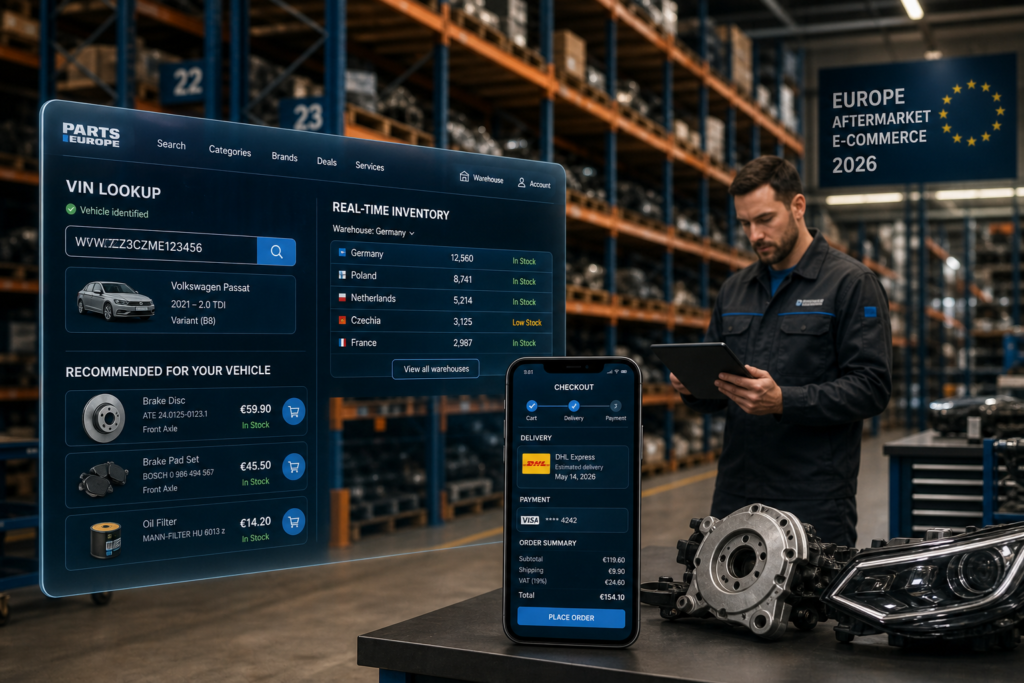
The European automotive aftermarket in 2026 requires distributors and retailers to meet a defined set of digital capabilities to remain competitive. These include VIN-based part identification, dedicated B2B purchasing portals, real-time supplier inventory integration, mobile-optimized storefronts, and reliable delivery communication.
Each capability gap carries direct revenue consequences, from lost conversions to declining client retention. Platforms that synchronize supplier data automatically, support trade account functionality, and deliver consistent order communication are measurably outperforming those that rely on manual processes or outdated infrastructure.
The European automotive aftermarket is undergoing a fundamental shift. In 2026, Digital Transformation is no longer a competitive advantage for auto parts businesses — it is a baseline requirement. Companies that lack the right digital infrastructure are losing recurring orders, B2B clients, and market share to competitors who have already made the transition.
This article covers the 5 most significant e-commerce trends reshaping the auto parts sector in Europe in 2026, what each trend means for distributors and retailers, and what practical steps can be taken to stay competitive.
1. VIN-based part identification becomes the standard, not a feature
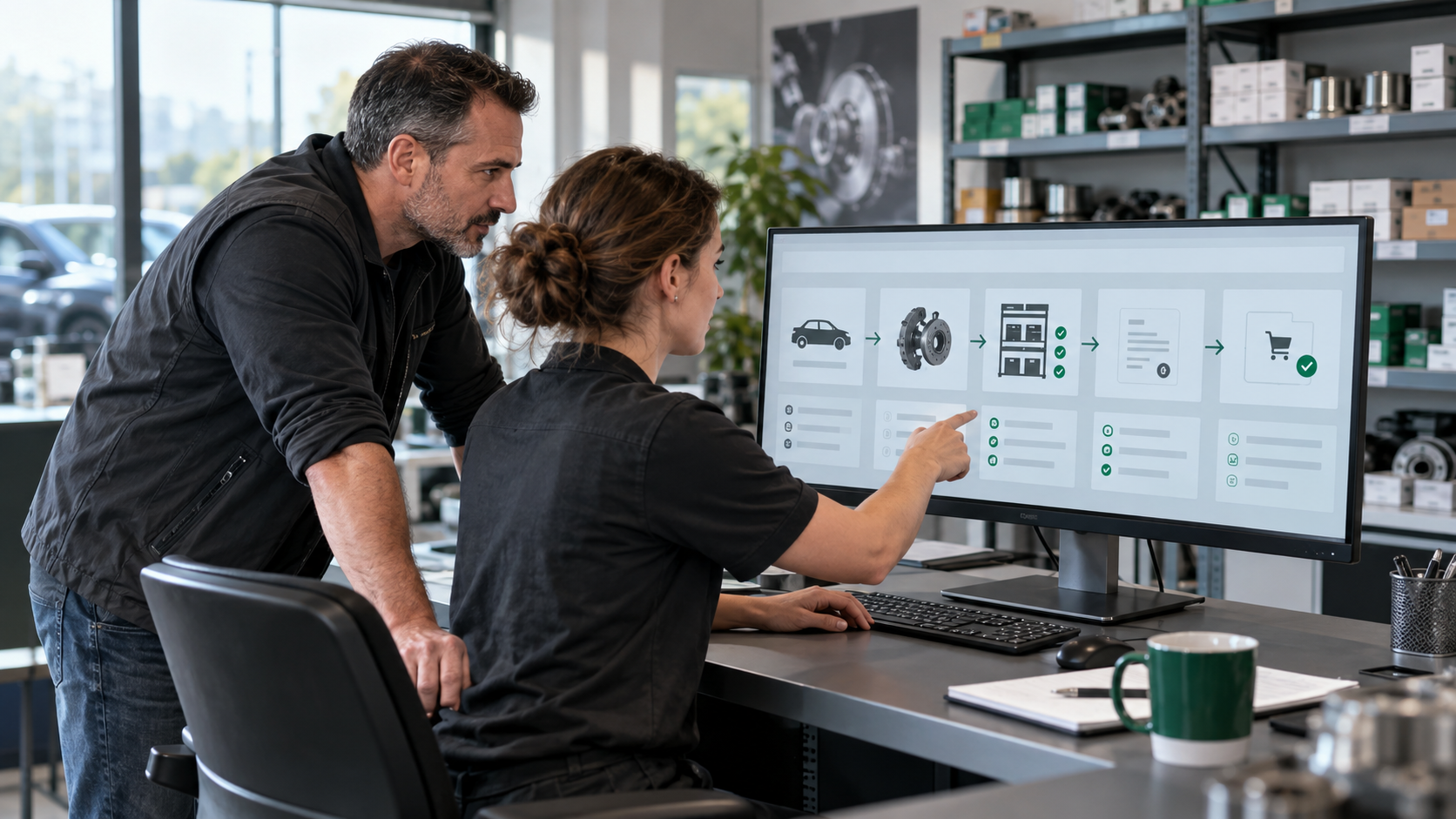
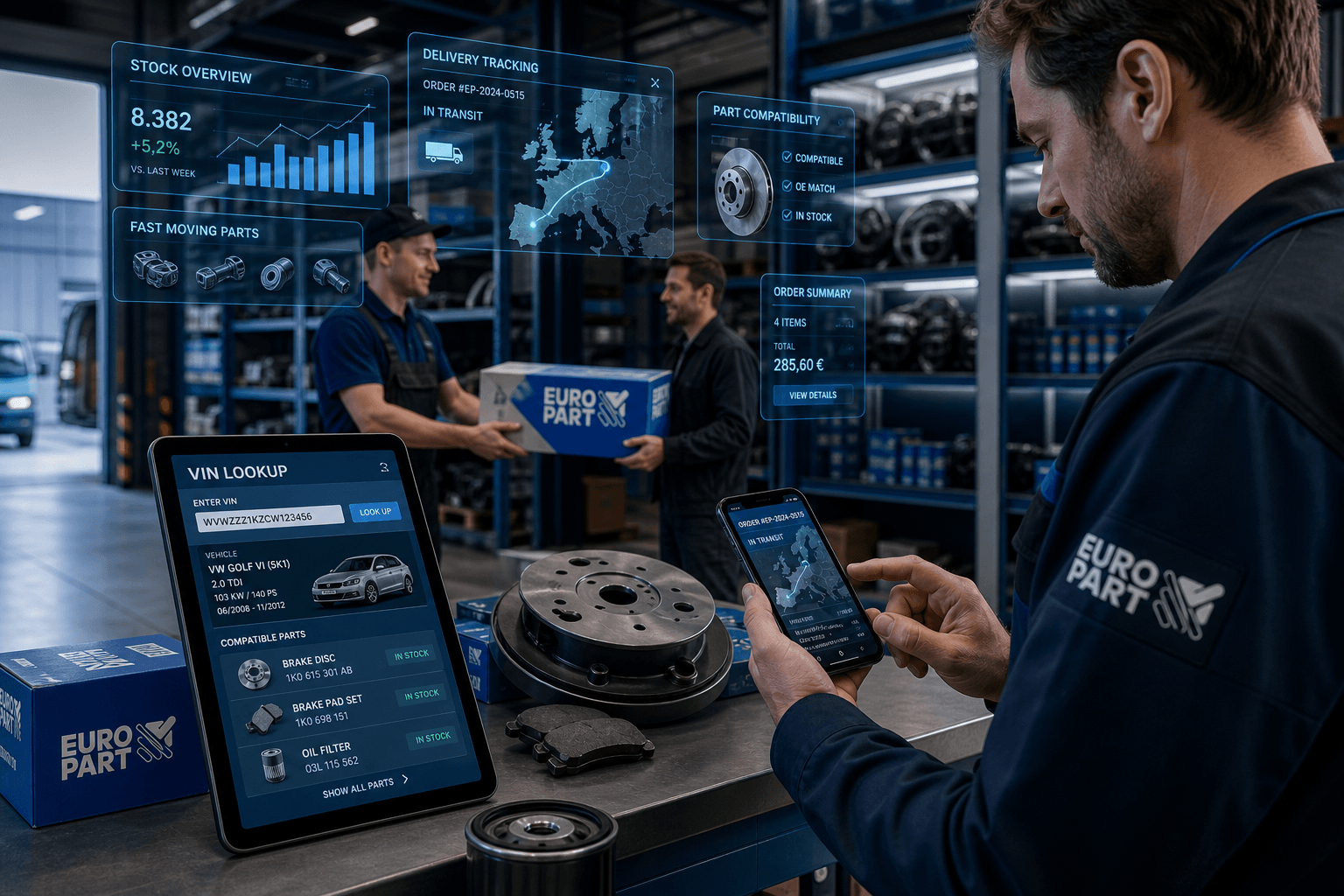
Automatic VIN search is no longer an advanced capability reserved for large platforms. In 2026, both B2C consumers and B2B buyers expect to identify the correct part instantly, without phone calls, without manual lookups, and without ordering errors.
Research across European aftermarket platforms consistently shows that webshops offering VIN-based identification and year/model filtering achieve conversion rates 25–40% higher than those relying on traditional catalog browsing. The reason is straightforward: customers who find the right part on the first attempt buy. Those who cannot, leave.
For distributors and retailers, this means that catalog architecture and vehicle fitment data quality are now direct revenue drivers, not back-office concerns.
2. B2B digital purchasing replaces phone and email orders
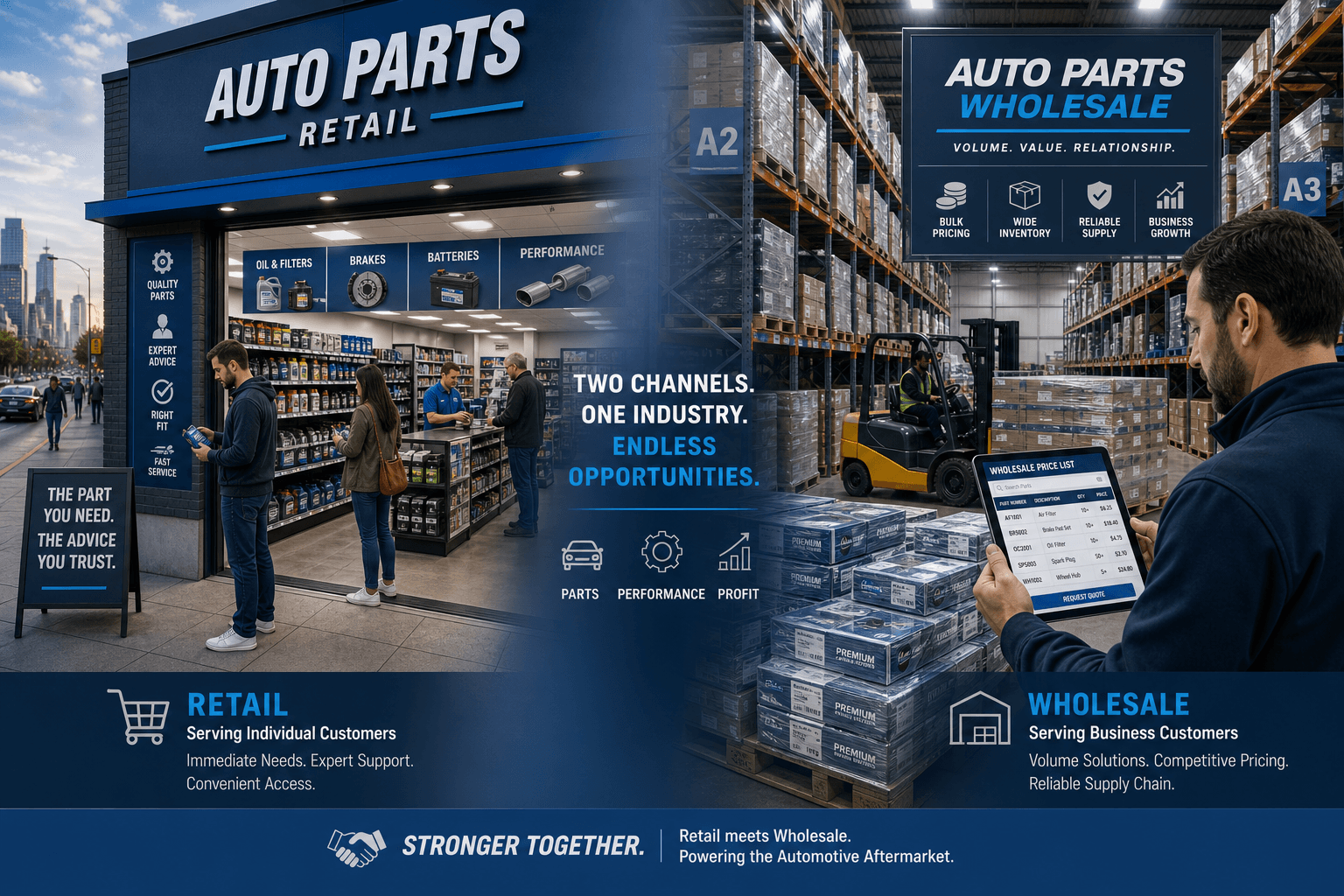
Auto service shops, fleet operators, and small retailers are systematically moving away from phone and email ordering. The driving force is efficiency: a structured B2B portal that shows live stock, per-client pricing, order history, and invoice access removes friction from the purchasing process on both sides.
Distributors who cannot offer dedicated B2B account access with real-time inventory visibility are increasingly losing recurring orders to competitors who can. In 2026, the expectation is not just online presence — it is a functional B2B purchasing environment that mirrors the simplicity of consumer eCommerce while supporting the complexity of trade relationships.
Key capabilities that B2B clients now expect as standard:
- dedicated login with client-specific pricing and credit terms
- real-time stock availability across supplier network
- fast reorder from previous purchase history
- automated order confirmation and shipping notification
- downloadable invoices and delivery documents
3. Real-time supplier integration replaces manual stock updates
Manual price and stock management is no longer viable at scale. In 2026, automatic supplier integration via API or EDI data feeds is a minimum operational requirement for any serious auto parts E-Commerce operation.
Platforms that do not synchronize supplier data in real time face a compounding set of problems: orders placed for out-of-stock items, incorrect pricing shown at checkout, customer complaints, and return logistics costs. Each of these creates a negative feedback loop that erodes trust and drives clients toward competitors with more reliable systems.
The practical implication for distributors is clear: the e-Commerce platform must connect directly to supplier inventory systems, update stock and pricing automatically, and reflect those changes in the customer-facing store without manual intervention. This is the infrastructure standard in 2026, not a premium option.
4. Mobile-first experience is a direct driver of sales conversion
More than 60% of traffic on auto parts e-Commerce platforms in Europe comes from mobile devices in 2026. This shift has direct commercial consequences that go beyond responsive design.
A platform that is technically mobile-compatible but not optimized for mobile purchasing — complex navigation, slow load times, multi-step checkout, small tap targets — loses the majority of its mobile visitors before they complete a transaction. In practice, this means that poor mobile UX is equivalent to turning away more than half of your potential customers at the door.
The mobile-first standard in 2026 requires fast page loads under 3 seconds, simplified checkout with minimal steps, clear product images and descriptions readable on small screens, and easy reorder capability for repeat B2B buyers.
5. Delivery speed and transparent order communication build long-term loyalty
Price is no longer the primary differentiator in the European auto parts aftermarket. Delivery time and communication reliability have become equally significant purchasing criteria, particularly for B2B buyers who need parts on a defined schedule to serve their own customers.
Businesses that integrate with multiple courier services and provide automatic order status updates via email or SMS are measurably outperforming those that do not, in terms of repeat purchase rates and client retention. The ability to promise 24–48 hour delivery and consistently deliver on that promise is a trust-building mechanism that compounds over time.
For distributors, this means that logistics integration is not a separate operational concern — it is a core component of the eCommerce experience and a direct input into customer lifetime value.
What these trends mean for your business in practice
Each of the five trends above represents a capability gap that, if left unaddressed, directly costs revenue. Taken together, they define the operational baseline for a competitive auto parts eCommerce business in Europe in 2026.
The good news is that none of these capabilities require building from scratch. The AUTOHUB platform is designed to deliver all five — VIN search, B2B portals, real-time supplier integration, mobile-optimized UX, and courier integration — as part of a structured 15-day implementation.
Frequently asked questions about auto parts e-Commerce trends in 2026
Which e-Commerce trend has the biggest impact on auto parts sales in 2026?
VIN-based part identification has the most direct measurable impact on conversion rates. Platforms offering accurate VIN search consistently show 35–40% higher conversion compared to catalog-only browsing. B2B portal functionality has the greatest impact on client retention and recurring order volume.
How important is mobile optimization for auto parts e-Commerce?
Critical. Over 60% of auto parts eCommerce traffic in Europe comes from mobile devices in 2026. A non-optimized mobile experience results in losing the majority of potential customers before they complete a purchase. Mobile-first design is a direct revenue factor, not a technical preference.
How can a small auto parts distributor compete with large platforms?
By focusing on the capabilities that build loyalty: real-time stock accuracy, fast B2B ordering, and reliable delivery communication. Large platforms compete on catalog breadth. Smaller distributors win on service reliability, pricing flexibility, and direct client relationships supported by a proper digital infrastructure.
Is API supplier integration necessary for all auto parts businesses?
For any business managing more than 2–3 suppliers and more than a few hundred daily orders, yes. Manual stock and pricing updates at that scale create errors at a rate that is commercially unsustainable. API or EDI integration is the operational baseline for reliable eCommerce at scale.
How long does it take to implement all five capabilities on a new platform?
With a purpose-built platform like AUTOHUB, all five capabilities — VIN search, B2B portals, supplier integration, mobile UX, and courier integration — are included as standard and configured during a structured 15-day onboarding process. No custom development is required.
Evaluate your current digital position
If one or more of these five capabilities is missing from your current platform, you are operating below the competitive baseline for the European automotive aftermarket in 2026. The question is not whether to address these gaps, but how quickly and at what cost.
AUTOHUB offers a free 30-minute business analysis session focused on your specific situation — your supplier relationships, your client mix, and your current platform capabilities. The goal is a clear picture of where the gaps are and what addressing them would look like in practice.
With more than 10 years of experience in eCommerce digitalization for the auto parts sector across Europe, we help distributors and retailers make confident decisions about their next digital step.
Request your free consultation